4.0
1 verified reviews
About
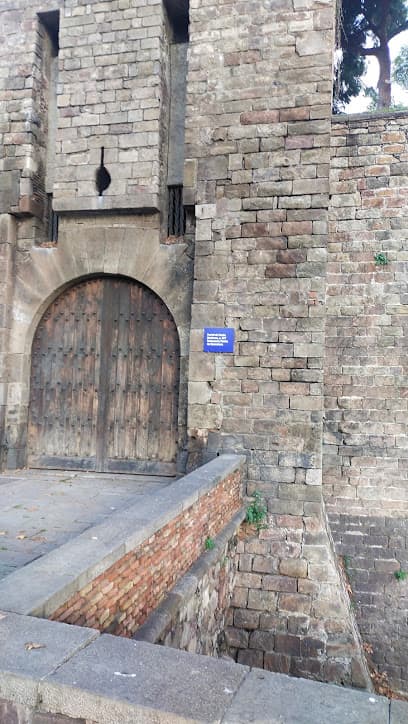
Barcelona used to be a cage. For centuries, the city was hemmed in by massive stone walls, a claustrophobic pressure cooker where the population density was high enough to make a modern subway car feel like a sprawling ranch. In 1854, the people finally had enough and tore the damn things down with their bare hands, desperate for air and the expansion that would become the Eixample. But they missed a spot. The Portal de Santa Madrona is that spot—the lone survivor of a defensive system that once kept the world at bay.
Standing at the edge of Av. del Paral·lel, this isn't some polished, Disneyfied version of history. It’s a heavy, uncompromising hunk of 14th-century military engineering. It’s tucked against the Reials Drassanes, the Royal Shipyards that now house the Maritime Museum, which is likely the only reason it wasn't pulverized along with the rest of the walls. When you look at it, you aren't looking at a 'tourist attraction' in the modern sense; you’re looking at the literal bones of old Barcelona. It’s a reminder that before the city became a playground for stag parties and cruise ship crowds, it was a fortress that knew how to bolt the door and wait out a siege.
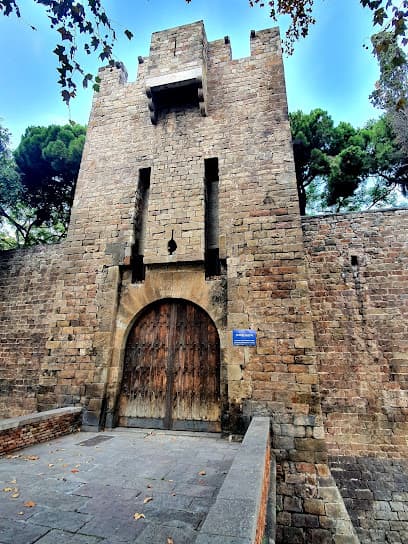
The gate is named after Santa Madrona, the 'other' patron saint of Barcelona, the one people tend to forget in favor of La Mercè or Santa Eulàlia. Legend says her remains were brought here by French merchants who got stuck in a storm; every time they tried to leave, the winds kicked up, which was interpreted as the saint wanting to stay put and enjoy the local seafood. The gate itself is flanked by two solid towers, looking every bit the part of a medieval checkpoint. It’s a visceral connection to a time when 'international travel' usually involved an invading army.
Most people walk right past it on their way to the waterfront or the Rambla, oblivious to the fact that they’re passing through the only remaining portal of the third wall. The atmosphere here is a strange collision of eras. On one side, you have the heavy, silent stone of the Middle Ages; on the other, the exhaust fumes and neon of Paral·lel, a street that was once the city’s theater and cabaret district—Barcelona’s answer to Montmartre. It’s a gritty, honest corner of the city where the past doesn't just sit in a museum; it looms over the sidewalk.
Is it worth a detour? If you care about the soul of a place, yes. You can’t understand why Barcelona looks the way it does—the tight, winding alleys of the Raval versus the wide-open grid of the Eixample—without understanding the walls that held it back. You don't need a ticket to see it from the street, but if you time it right, you can actually step inside. The gate and its small, quiet garden are usually only open to the public on the first and third Sunday of each month. It’s a rare moment of stillness in a neighborhood that rarely shuts up.
Don't expect gift shops or costumed guides. This is just stone, iron, and history. It’s a place for the quiet realization that the city you see today is built on top of a much harder, more fortified reality. It’s a survivor, scarred and soot-stained, and in a city that’s constantly reinventing itself for the next wave of visitors, there’s something deeply respectable about that.
Type
Tourist attraction
Features
Tourist attraction
Categories
HistoryArchitectureMedievalMilitary
Opening Hours
- MondayOpen 24 hours
- TuesdayOpen 24 hours
- WednesdayOpen 24 hours
- ThursdayOpen 24 hours
- FridayOpen 24 hours
- SaturdayOpen 24 hours
- SundayOpen 24 hours
Accessibility
- Visible from public sidewalk
- Flat terrain around the exterior
- Limited accessibility inside the historic gate structure
Location
Av. del Paral·lel, 12
Ciutat Vella, Barcelona
Nearby
ATTRACTION
Portal de Santa Madrona
50 m · Ciutat Vella
The last standing gate of Barcelona’s medieval walls, a 14th-century survivor of stone and grit that offers a rare, silent glimpse into the city’s fortified past.
4.4(102)
MonumentTourist attraction
ATTRACTION
Camara ZBE
100 m · Ciutat Vella
The unblinking digital eye of the state. Not a monument, but a traffic camera on Passeig Josep Carner that marks the end of Barcelona’s gritty, diesel-soaked past.
2.0(1)
Tourist attraction
RESTAURANT
Chilango's
€€350 m · Ciutat Vella
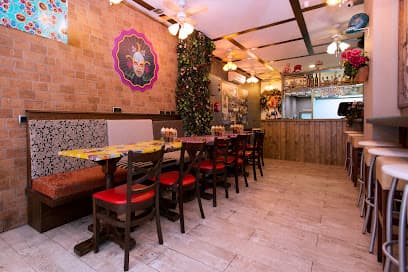
A loud, grease-slicked temple to the taco on the gritty edge of Poble-sec. No frills, just slow-cooked cochinita pibil, lethal micheladas, and the best tres leches in the city.
4.6(4K)
Mexican restaurantTaco restaurant
RESTAURANT
My Fucking Restaurant
350 m · Ciutat Vella
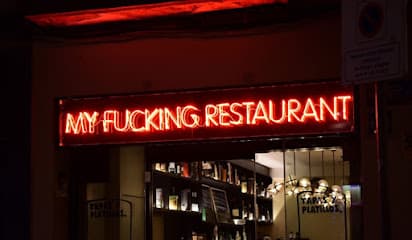
Don't let the provocative name fool you; this Raval haunt delivers a serious, zero-waste masterclass in Mediterranean soul, where the bravas are legendary and the ego is left at the door.
4.4(1K)
Mediterranean restaurantRestaurant
HOTEL
Hostal Yomo BCN Port
€50 m · Sants-Montjuïc
A no-nonsense basecamp on the gritty edge of Paral·lel, where the salt of the port meets the chaos of the Raval. It’s clean, cold, and exactly what you need after a long night.
3.8(538)
HotelLove hotel
HOTEL
Hotel Casa Lit Barcelona
€200 m · Ciutat Vella
A former theater turned minimalist haunt in the gritty trenches of El Raval. It’s raw, real, and steps away from the port—exactly where Barcelona hides its soul.
4.0(1K)
Hotel
Frequently Asked Questions
Is Portal de Santa Madrona worth visiting?
Yes, if you are a history enthusiast. It is the only surviving gate of the city's medieval walls and offers a raw, unpolished look at Barcelona's defensive past without the usual tourist crowds.
Can you go inside the Portal de Santa Madrona?
Public access to the interior and the adjacent gardens is generally limited to the first and third Sunday of every month, from 11:00 AM to 2:00 PM. However, the exterior is visible from the street 24/7.
How do I get to the Portal de Santa Madrona?
The gate is located right next to the Drassanes Metro station (L3). It is a 5-minute walk from the bottom of La Rambla and the Christopher Columbus Monument.
Is there an entrance fee for the Portal de Santa Madrona?
Viewing the gate from the street is free. During the limited hours when the gardens are open to the public, entry is typically free of charge as well.
Reviews
0 reviews for Puerta de Santa Madrona
No reviews yet. Be the first to share your experience!