About
Step off the Avinguda del Paral·lel, a concrete artery that smells of bus exhaust and cheap gin, and cut deep into the Raval. You’re looking for Carrer l'Hort de Sant Pau. Most people—the ones clutching their phones and hunting for the next Instagrammable brunch spot—walk right past it. Their loss. Behind a weathered stone wall lies the Jardins de Sant Pau del Camp, and if you have any appreciation for the unvarnished bones of a city, this place will hit you like a shot of strong espresso.
This isn’t a park in the way most people think of parks. There are no manicured rose bushes or whimsical fountains here. It is the courtyard of the Monestir de Sant Pau del Camp, the oldest church in Barcelona, a Romanesque survivor that has been standing its ground since the 9th century. While the rest of the city was busy tearing itself down and rebuilding in glass and steel, this place just stayed put. It’s seen the Moors, the crusaders, the anarchists, and the tourists, and it doesn't seem particularly impressed by any of them.
The air changes when you walk through the gate. The frantic, jagged energy of the Raval—the shouting vendors, the clatter of skateboards, the low-level hum of urban desperation—just evaporates. It’s replaced by a silence so thick you can almost taste it. The gardens are simple, shaded by ancient trees that look like they’ve seen a few things they aren’t telling. You’re standing on ground that has been considered sacred for over a millennium. That kind of history has a physical weight to it.
The star of the show, if you can call it that, is the monastery itself. It’s small, squat, and built like a fortress. The cloisters are the real draw—tiny, intimate, and featuring polylobed arches that hint at the Moorish influence that once defined this peninsula. It’s a masterclass in Romanesque architecture, stripped of the gaudy gold and pretension of the later Gothic cathedrals. This is religion for the working man, for the soldier, for the survivor. It’s heavy stone and dim light, and it’s beautiful in its absolute refusal to be pretty.
Is it worth visiting? If you’re looking for a playground or a place to kick a football, absolutely not. Go to Ciutadella for that. But if you want to understand the soul of Barcelona—the part that existed before the cruise ships and the luxury boutiques—then yes, it’s essential. It’s one of the best hidden spots in Barcelona precisely because it doesn't try to be a 'spot' at all. It just is.
The Raval neighborhood gets a bad rap for being 'gritty,' which is usually code for 'poor people live here.' But that grit is what makes a place like Sant Pau del Camp feel real. You have this ancient, spiritual sanctuary surrounded by one of the most densely populated, chaotic, and vibrant neighborhoods in Europe. That contrast is the whole point. You can spend an hour sitting on a bench here, watching the light shift across the stone, and then walk fifty yards and be back in the middle of a riot of cultures, smells, and noise. It’s a palate cleanser for the soul.
Don't expect a gift shop. Don't expect a cafe. Just bring yourself, a bit of respect, and maybe a book you’ll never actually open because you’re too busy staring at the way the sun hits the bell tower. It’s a reminder that while the world outside is screaming for your attention, the stone stays silent. And sometimes, silence is exactly what you need to hear.
Type
Park
Duration
1 hour
Best Time
Morning for the best light in the cloisters and maximum tranquility.
Features
Park
Categories
ArchitectureHistoryReligious SitePark
Ticket Prices
adult€5
child€0
senior€3
Must-See Highlights
The 12th-century Romanesque cloisters
The ancient tomb of Guifré II Borrell
The visceral contrast between the ancient stone and the modern Raval graffiti outside
Visitor Tips
Check the monastery opening hours before visiting as they can be limited
Combine this with a walk through the nearby Rambla del Raval to see the Botero Cat
Respect the silence; this is still an active place of reflection
Good For
History buffsArchitecture loversSolo travelers seeking peacePhotographers
Why Visit
Oldest standing church and monastery complex in Barcelona
Unique Romanesque cloisters with rare Moorish-influenced arches
A genuine silent sanctuary in the heart of the chaotic Raval neighborhood
Nearby Landmarks
- 5-minute walk from Avinguda del Paral·lel
- 7-minute walk from Rambla del Raval
- 10-minute walk from Mercat de Sant Antoni
Accessibility
- Ground level access to gardens
- Partial accessibility for the monastery interior
Location
Carrer l'Hort de Sant Pau, 2
Ciutat Vella, Barcelona
Nearby Hotels
Nearby Restaurants
In Ciutat Vella
ATTRACTION
BARSHELONA
Ciutat Vella
Forget the plastic bulls and tacky magnets. This is where Barcelona’s soul is bottled into art, a small sanctuary of local design hidden in the shadows of the Gothic Quarter.
0.0(0)
Tourist attraction
ATTRACTION
Minajoe art
Ciutat Vella
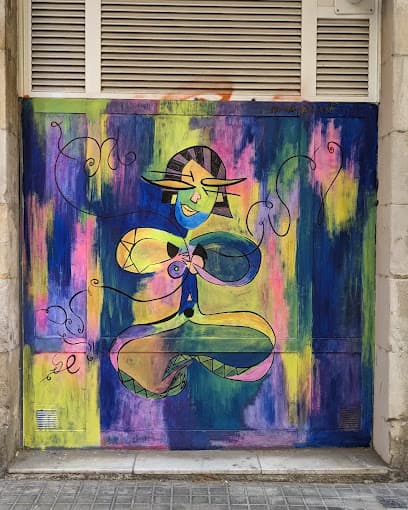
A raw, paint-splattered antidote to the sterile museum circuit. This is where pop-art meets the grit of the street, served straight from the artist’s hands in the heart of old Barcelona.
0.0(0)
Tourist attraction
ATTRACTION
ME LATA 1
Ciutat Vella
The recycled, spray-painted core of El Raval's street art scene. A workshop where discarded tin cans are reborn as poetic manifestos for the city's romantics.
0.0(0)
Tourist attraction
Frequently Asked Questions
Is Jardins de Sant Pau del Camp worth visiting?
Yes, if you appreciate history and quiet. It is the site of the oldest church in Barcelona and offers a rare, peaceful Romanesque atmosphere that feels worlds away from the city's tourist crowds.
What is the best time to visit Sant Pau del Camp?
Visit in the morning or late afternoon when the light hits the Romanesque cloisters. It's rarely crowded, but the shadows and silence are most evocative during these times.
How do I get to Jardins de Sant Pau del Camp?
Take the L3 Metro to the Paral·lel station. From there, it's a short 5-minute walk into the Raval neighborhood via Carrer de Sant Pau.
Do I need tickets for the monastery?
While the surrounding gardens are often accessible, there is a small fee (usually around €5) to enter the monastery and its famous cloisters. It is well worth the price for the historical depth.
Reviews
0 reviews for Park
No reviews yet. Be the first to share your experience!