4.4
206,160 verified reviews
About
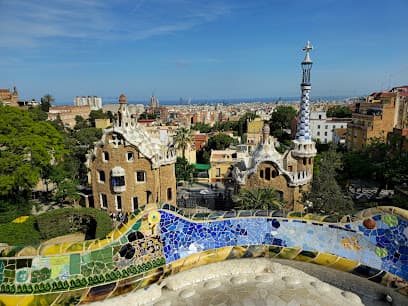
Park Güell is the greatest failed real estate venture in the history of Western civilization. Let’s be clear: Antoni Gaudí and his patron, Eusebi Güell, didn’t set out to build a public park for the masses to eat overpriced gelato and take panoramic selfies. They wanted to build a gated community for the Barcelona elite—a hilltop utopia far from the soot and anarchists of the industrial city below. It was a total flop. Only two houses were ever built, and Gaudí ended up living in one of them because nobody else would buy the damn things.
Today, it’s a UNESCO-listed fever dream that feels like someone dropped a gingerbread house into a vat of acid and then tried to fix it with broken plates. To get here, you have to commit to a sweaty, uphill pilgrimage from the Lesseps or Vallcarca metro stations. By the time you reach the gates, you’ll be questioning your life choices, but then you see it: the monumental staircase and that famous, multicolored salamander—the 'Dragon'—staring back at you with a ceramic grin. It’s covered in trencadís, the technique of using shards of discarded tiles to create something beautiful out of the wreckage. It’s a metaphor for Barcelona itself, really.
Inside the 'Monumental Zone,' which requires a ticket and a timed entry that is strictly enforced by staff who have seen too many tourists, you’ll find the Hypostyle Room. It was supposed to be a market for the residents who never moved in. Instead, it’s a forest of eighty-six Doric columns supporting a ceiling of circular mosaics. It’s cool, dark, and slightly eerie, like a pagan temple hidden inside a municipal park. Above it lies the Plaça de la Natura, a massive open space bordered by a serpentine bench that snakes around the perimeter. This bench is ergonomically designed—Gaudí supposedly had a workman sit in wet plaster to get the shape of the human butt just right. It’s the best place in the city to sit down, catch your breath, and look out over the sprawl of Barcelona toward the sea, with the spires of the Sagrada Família poking through the haze like a stone forest.
But here’s the truth: Park Güell is a victim of its own genius. On a hot July afternoon, the 'vibe' is less 'artistic sanctuary' and more 'commuter rail station at rush hour.' You will be elbowed by influencers, dodged by school groups, and serenaded by buskers playing 'Despacito' on the accordion. If you want to actually feel the soul of the place, you have to go early. Be there when the gates open at 9:30 AM, or wait until the sun starts to dip and the light turns the stone into gold.
Is it worth the ten euros and the calf-burning hike? Yeah, it is. Even with the crowds, there is something undeniably visceral about Gaudí’s refusal to use a straight line. He listened to the trees and the rocks instead of the architects of his time. The viaducts look like they’re growing out of the hillside, and the stone porticos lean at angles that should be impossible. It’s a reminder that even when you fail spectacularly at what you intended to do, you might accidentally create something that people will still be fighting for a ticket to see a hundred years after you’re gone. Just bring water, wear decent shoes, and don’t expect to have the dragon to yourself.
Type
Park, Tourist attraction
Duration
2-3 hours
Best Time
Early morning (9:30 AM) to avoid the peak tourist rush and midday heat.
Guided Tours
Available
Audio Guide
Available
What People Say
gaudi(9366)architecture(4694)mosaic(1260)sagrada familia(870)ticket(387)escalators(368)casa mila(105)gingerbread house(104)
Features
Park
Tourist attraction
Categories
ArchitectureUNESCOGaudíModernism
Ticket Prices
adult€10
child€7
senior€7
Opening Hours
- Monday9:30 AM to 5:30 PM
- Tuesday9:30 AM to 5:30 PM
- Wednesday9:30 AM to 5:30 PM
- Thursday9:30 AM to 5:30 PM
- Friday9:30 AM to 5:30 PM
- Saturday9:30 AM to 5:30 PM
- Sunday9:30 AM to 5:30 PM
Must-See Highlights
The Dragon (Salamander) at the entrance stairway
The Serpentine Bench on the Plaça de la Natura
The Hypostyle Room with its 86 columns
The Laundry Room Portico with its slanting stone walls
The Austria Gardens
Visitor Tips
Book your tickets online at least 2 weeks in advance; they rarely have walk-up availability.
Children under 7 enter for free, but those aged 7-12 require a discounted ticket.
Enter via the Carretera del Carmel entrance if you want to avoid the steepest uphill climb.
The Gaudí House Museum requires a separate ticket from the main park entry.
Bring a reusable water bottle; there are fountains inside to refill.
Good For
Architecture loversPhotographersFamilies with kidsFirst-time visitors
Why Visit
The world's most famous example of trencadís (broken tile) mosaic art
Unrivaled views of the Barcelona skyline and the Mediterranean Sea
A surrealist architectural landscape where nature and stone are indistinguishable
Nearby Landmarks
- Gaudí House Museum (1-minute walk)
- Turó de les Tres Creus (10-minute walk)
- Bunkers del Carmel (20-minute walk)
- Casa Vicens (25-minute walk)
Accessibility
- Wheelchair accessible routes available
- Accessible toilets
- Specific entrance for people with reduced mobility (Carretera del Carmel)
Location
Gràcia, Barcelona
Nearby Hotels
Nearby Restaurants
In Gràcia
ATTRACTION
Maison Sara
Gràcia
Forget the mass-produced kitsch on La Rambla. This is Gràcia at its best: a tactile, clay-smeared workshop where the art is as raw and honest as the neighborhood itself.
0.0(0)
Tourist attraction
ATTRACTION
Intercambiador de libros
Gràcia
A humble, weather-beaten box in the hills of Vallcarca where local history is traded one dog-eared paperback at a time. No tourists, no Wi-Fi, just paper and community.
0.0(0)
Park
ATTRACTION
View
Gràcia
Forget the elbow-to-elbow chaos of Park Güell. This is the raw, vertical soul of Gràcia, where the city unfolds in a silent, sun-drenched sprawl at your feet.
0.0(0)
Garden
Frequently Asked Questions
Is Park Güell worth visiting?
Yes, for the unique trencadís mosaics and the best panoramic views of Barcelona, but it requires booking weeks in advance to avoid disappointment.
How do I get to Park Güell?
Take Metro L3 to Lesseps or Vallcarca and follow the signs for a 15-20 minute uphill walk, or take Bus 24 from Plaça de Catalunya which drops you closer to the entrance.
Do I need tickets for Park Güell?
Yes, a ticket is mandatory to enter the 'Monumental Zone' where the dragon and the serpentine bench are located; the surrounding forest areas are also largely restricted to ticket holders or local residents.
What is the best time to visit Park Güell?
Arrive at the 9:30 AM opening slot to beat the heat and the heaviest tour groups, or visit two hours before closing for the best photography light.
Reviews
0 reviews for Park Güell
No reviews yet. Be the first to share your experience!