4.4
436 verified reviews
About
In June 1926, a man who looked like a beggar was struck by a tram on the Gran Via. He was disheveled, pockets empty, no identification. He was taken here, to the Hospital de la Santa Creu, to die in a ward for the indigent. It wasn’t until the next day that someone realized the 'beggar' was actually Antoni Gaudí, the man who was rebuilding the city’s soul. He died three days later in these very halls. If you want to understand the real Barcelona—not the shiny, airbrushed version on the postcards—you start here, in the heavy, somber shadows of El Raval.
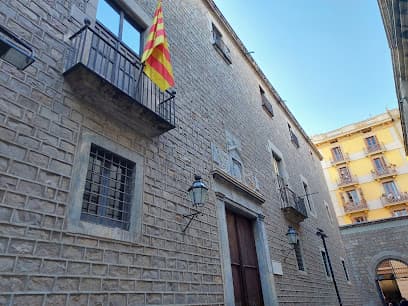
Founded in 1401, the Old Hospital de la Santa Creu (Antic Hospital de la Santa Creu) was the city’s primary infirmary for over five centuries. It wasn’t a place of luxury; it was a place of necessity, a unification of six smaller hospitals designed to handle the plagues, the wars, and the endless stream of broken bodies that a Mediterranean port city produces. Today, the doctors are gone, replaced by the hushed whispers of scholars and the scratching of pens, but the weight of all that history remains. It is one of the most significant historic sites in Barcelona, a massive complex of civil Gothic architecture that feels like it’s holding the rest of the neighborhood upright.
Walking into the central courtyard, the Patio de la Santa Creu, is like hitting a mute button on the city. Outside, the Raval is a frantic, beautiful mess of skateboards, shouting, and the smell of frying oil. Inside, there is the scent of orange trees and damp stone. The cloisters are magnificent—wide, sweeping arches that have seen everything from the Black Death to the Spanish Civil War. It’s a place for contemplation, or just for sitting on a stone bench and realizing that your problems are very, very small in the grand scheme of six hundred years.
The complex now houses the Biblioteca de Catalunya (the Library of Catalonia). If you can get inside the reading rooms, do it. The vaulted ceilings and massive stone pillars make it feel more like a cathedral of knowledge than a library. It’s a protein rush for the brain, a reminder that before Barcelona was a tourist playground, it was a center of serious intellectual grit. You’ll also find the Institut d'Estudis Catalans and the Escola Massana art school here, which keeps the place from becoming a stagnant museum. It’s still a working part of the city, filled with students and locals who treat the ancient stones with a casual, lived-in respect.
Is the Old Hospital de la Santa Creu worth visiting? Absolutely, especially if you’re looking for things to do in El Raval that don’t involve dodging selfie sticks. It’s free to wander the courtyard, and it offers a visceral connection to the city’s past that the Sagrada Família, for all its genius, can’t quite match. This is the grounded, human side of the story. It’s where the city’s greatest architect died among the poor, and where the city’s history is written in every cracked tile and weathered arch.
Don't expect a guided tour with headsets and gift shops at every turn. This is a place that leaves you alone with your thoughts. It’s a necessary reset for the nervous system. If you’re wandering near La Rambla and the crowds start to feel like a claustrophobic fever dream, duck into Carrer de l'Hospital. Find the gate. Walk into the silence. It’s the best way to remember that Barcelona has a heart that beats much deeper than the surface-level noise suggests.
Type
Historical landmark, Tourist attraction
Duration
45-60 minutes
Best Time
Late morning or early afternoon when the sun hits the courtyard but the student crowds are in class.
What People Say
library(15)gardens(14)gaudi(8)peed(7)peaceful(7)space(6)1401(5)smells(5)
Features
Historical landmark
Tourist attraction
Categories
ArchitectureGothicHistoryLibrary
Ticket Prices
Free Admission
No tickets required
Opening Hours
- Monday10 AM to 2:30 PM
- Tuesday10 AM to 2:30 PM
- Wednesday10 AM to 2:30 PM
- Thursday10 AM to 2:30 PM
- Friday10 AM to 2:30 PM
- Saturday10 AM to 5 PM
- Sunday10 AM to 5 PM
Must-See Highlights
The Gothic cloisters surrounding the central patio
The cross marking the spot where the hospital was founded
The entrance to the Biblioteca de Catalunya with its massive stone arches
The orange trees in the courtyard, a classic Mediterranean hospital feature
Visitor Tips
Enter through the gate on Carrer de l'Hospital for the most dramatic reveal.
Look for the art students from Escola Massana sketching in the corners of the cloisters.
Combine this with a visit to the nearby Jardins de Rubió i Lluch, which are part of the same complex.
Good For
History buffsArchitecture enthusiastsBudget travelersSolo travelers seeking peace
Why Visit
The site of Antoni Gaudí's final days and death in 1926
One of the world's best-preserved examples of civil Gothic architecture
A silent, orange-tree-filled sanctuary in the middle of the chaotic Raval neighborhood
Nearby Landmarks
- 5-minute walk from La Boqueria Market
- 6-minute walk from Gran Teatre del Liceu
- 8-minute walk from Palau Güell
- 10-minute walk from Plaça de Catalunya
Accessibility
- Wheelchair accessible courtyard
- Ground level entry from Carrer de l'Hospital
Location
Carrer de l'Hospital, 56
Ciutat Vella, Barcelona
Nearby Hotels
Nearby Restaurants
In Ciutat Vella
ATTRACTION
Park
Ciutat Vella
A thousand years of silence tucked behind a Romanesque monastery, where the grit of El Raval dissolves into ancient stone, cool shadows, and the heavy weight of history.
0.0(0)
Park
ATTRACTION
BARSHELONA
Ciutat Vella
Forget the plastic bulls and tacky magnets. This is where Barcelona’s soul is bottled into art, a small sanctuary of local design hidden in the shadows of the Gothic Quarter.
0.0(0)
Tourist attraction
ATTRACTION
Minajoe art
Ciutat Vella
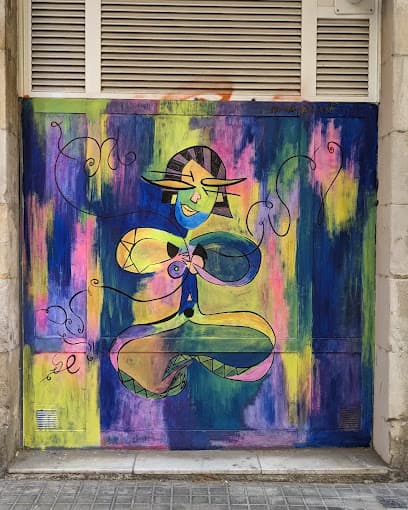
A raw, paint-splattered antidote to the sterile museum circuit. This is where pop-art meets the grit of the street, served straight from the artist’s hands in the heart of old Barcelona.
0.0(0)
Tourist attraction
Frequently Asked Questions
Is the Old Hospital de la Santa Creu worth visiting?
Yes, it is one of the most peaceful and historically significant spots in the city. It offers a rare look at 15th-century Gothic architecture and is the site where Antoni Gaudí passed away.
Where did Antoni Gaudí die?
Gaudí died in 1926 at the Hospital de la Santa Creu after being hit by a tram. At the time, it was a hospital for the poor, and he was not immediately recognized.
Can you visit the Library of Catalonia inside?
The courtyard is open to the public, but access to the library reading rooms is generally reserved for researchers and students. However, the library often participates in open house days like Sant Jordi or 48h Open House Barcelona.
How much does it cost to visit?
Entering the main courtyard and wandering the exterior cloisters is free of charge. It is a public space used by locals and students.
Reviews
0 reviews for Old Hospital de la Santa Creu
No reviews yet. Be the first to share your experience!