4.0
3 verified reviews
About
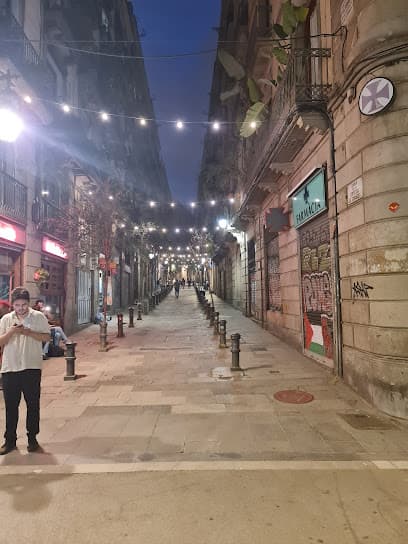
Forget what you think you know about Avignon. This isn’t some breezy French provincial dream. Carrer d'Avinyó is a deep, dark, and narrow slit in the stone heart of Barcelona’s Gothic Quarter, and its history is written in sweat, paint, and the kind of grit that doesn't wash off. If you’re looking for the 'charming' Barcelona promised in the brochures, you might find it here, but only if your definition of charm includes a healthy dose of reality and a side of historical scandal.
Start at the top, where it breaks off from the tourist-choked Carrer de Ferran. Immediately, the sky vanishes. The buildings lean in like they’re whispering secrets they’ve kept since the Roman walls were fresh. This is one of the oldest streets in the city, and you can feel the weight of it. The air changes—it’s cooler, smelling of damp stone, old paper, and the occasional waft of roasting coffee or frying garlic from a hidden kitchen.
Let’s talk about the elephant in the room: Pablo Picasso. In 1907, he painted 'Les Demoiselles d'Avignon,' the jagged, confrontational masterpiece that basically invented Cubism. People assume it’s about France. It’s not. It’s about the women who worked the brothels right here, specifically at number 44. Back then, this was a red-light district, a place of vice and desperation that Picasso frequented. He took that raw, visceral energy and turned it into art that broke the world. Walking here now, you aren't just on a shopping street; you’re walking through the birthplace of the modern aesthetic.
Today, the sex trade has mostly been replaced by high-end sneakers and artisanal candles, but the street hasn't entirely lost its edge. It’s a strange, schizophrenic mix. You’ll find sleek boutiques selling €300 Japanese denim standing right next to dusty storefronts that look like they haven't changed since the Spanish Civil War. It’s one of the best places for shopping in Barcelona if you hate malls. Look for 'La Manual Alpargatera' just off the main drag—it’s where everyone from Salvador Dalí to Pope John Paul II got their espadrilles.
As you move further down towards the sea, the street opens up and then tightens again, passing remnants of the Roman wall that once defended Barcino. It’s a physical timeline. You’re walking on layers of history—Roman, Medieval, Modernist, and the current layer of digital nomads looking for the perfect Instagram angle.
Is it crowded? Yes. Are there pickpockets? Absolutely—keep your wallet in your front pocket and your wits about you. But Carrer d'Avinyó is essential. It’s a reminder that Barcelona isn't just a museum; it’s a living, breathing, occasionally foul-mouthed entity. It’s a street that has seen everything and judged none of it. Don't just rush through it to get to the next landmark. Stop. Look up at the crumbling balconies. Imagine the ghosts of the 'Demoiselles' looking back down at you. This is the real Barri Gòtic—beautiful, bruised, and utterly unapologetic. It’s the kind of place that reminds you why we travel in the first place: to feel the friction of the world.
Type
Tourist attraction
Duration
45-60 minutes
Best Time
Mid-morning for shopping or late evening for atmosphere.
Guided Tours
Available
Features
Tourist attraction
Categories
HistoryArtShoppingArchitecture
Ticket Prices
Free Admission
No tickets required
Must-See Highlights
Number 44, the site of the former brothel that inspired Picasso
The intersection with Carrer de la Boqueria for classic Gothic views
Local artisan shops like La Manual Alpargatera nearby
Remnants of the Roman city walls visible near the lower end
Visitor Tips
Look up at the balconies to see traditional Catalan architecture and laundry hanging out.
Avoid the tourist-trap restaurants at the very top near Carrer de Ferran; head deeper into the side streets for better food.
The street is quite long; start at the top and walk down toward the sea for the best flow.
Good For
History buffsArt loversPhotographersShoppers
Why Visit
Inspiration for Picasso's 'Les Demoiselles d'Avignon'
One of Barcelona's oldest and most architecturally diverse streets
Premier destination for independent fashion and local artisan shops
Nearby Landmarks
- 5-minute walk from Plaça de Sant Jaume
- 4-minute walk from Plaça Reial
- 6-minute walk from Barcelona Cathedral
- 8-minute walk from La Rambla
Accessibility
- Pedestrianized street
- Flat but uneven historic paving
- Narrow sidewalks in some sections
Location
Carrer d'Avinyó, 36
Ciutat Vella, Barcelona
Nearby Hotels
Nearby Restaurants
In Ciutat Vella
ATTRACTION
Park
Ciutat Vella
A thousand years of silence tucked behind a Romanesque monastery, where the grit of El Raval dissolves into ancient stone, cool shadows, and the heavy weight of history.
0.0(0)
Park
ATTRACTION
BARSHELONA
Ciutat Vella
Forget the plastic bulls and tacky magnets. This is where Barcelona’s soul is bottled into art, a small sanctuary of local design hidden in the shadows of the Gothic Quarter.
0.0(0)
Tourist attraction
ATTRACTION
Minajoe art
Ciutat Vella
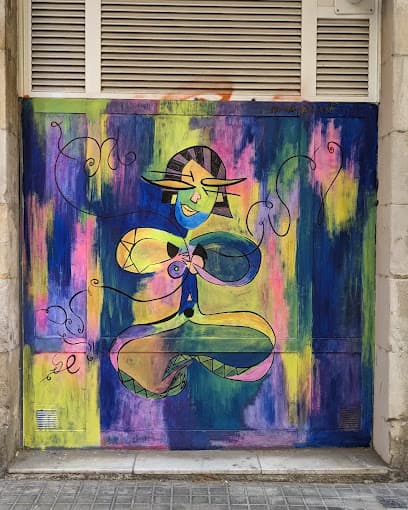
A raw, paint-splattered antidote to the sterile museum circuit. This is where pop-art meets the grit of the street, served straight from the artist’s hands in the heart of old Barcelona.
0.0(0)
Tourist attraction
Frequently Asked Questions
Is Carrer d'Avinyó worth visiting?
Yes, it is one of the most atmospheric and historically significant streets in the Gothic Quarter, famous for its connection to Picasso and its unique mix of independent boutiques.
What is the Picasso connection to Carrer d'Avinyó?
The street inspired his famous painting 'Les Demoiselles d'Avignon.' The 'ladies' in the title were actually sex workers from a brothel located at number 44 Carrer d'Avinyó.
What is the best time to visit Carrer d'Avinyó?
Visit in the mid-morning (around 10:30 AM) when the shops begin to open but the heavy afternoon crowds haven't yet arrived, or late at night to experience its moody, cinematic atmosphere.
Is Carrer d'Avinyó safe?
It is generally safe but very narrow and often crowded, making it a prime spot for pickpockets. Stay alert and keep your belongings secure.
Reviews
0 reviews for Carrer d'Avinyó
No reviews yet. Be the first to share your experience!