4.7
36,453 verified reviews
About
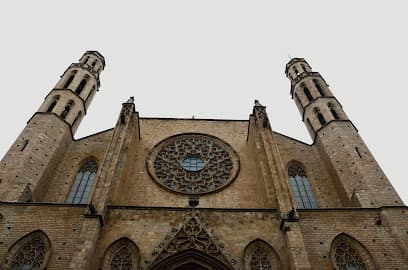
Forget the Sagrada Família for a second. If you want to understand the soul of Barcelona—the grit, the sweat, and the stubborn pride of the people who actually built this city—you come here. The Basílica de Santa Maria del Mar isn’t a monument to royal ego or some architect’s fever dream. It’s a monument to the neighborhood. Specifically, the neighborhood of La Ribera, back when it was the heart of a maritime empire. This is the 'best Gothic church in Barcelona' because it doesn't try too hard. It’s lean, it’s mean, and it’s hauntingly beautiful.
Walking in from the narrow, sun-starved streets of El Born, the first thing that hits you isn't the smell of incense, but the sheer, terrifying scale of the void. Most Gothic cathedrals are cluttered with side chapels and gold-leafed junk that looks like it was curated by a hoarder with a religious complex. Not here. Santa Maria del Mar is stripped back to the bone. The columns are impossibly slender, soaring up like stone palm trees, spaced further apart than in almost any other Gothic structure in Europe. It feels less like a building and more like a hollowed-out mountain.
You’re standing on the work of the 'bastaixos.' These were the dockworkers of the 14th century, the guys who spent their days hauling massive blocks of stone on their backs from the royal quarry on Montjuïc all the way to this site. They did it for free, on their own time, because this was their church. Look at the bronze reliefs on the main doors; you’ll see them there, bent double under the weight of the stone. It’s a visceral reminder that while kings were busy losing wars, the working class was busy building immortality. This history was immortalized in the novel 'Cathedral of the Sea,' and for once, the hype is actually justified by the masonry.
The reason it looks so clean—so 'modern' in its minimalism—is actually due to a tragedy. In 1936, during the early days of the Spanish Civil War, anarchists set the place on fire. It burned for eleven days. The baroque altars, the wooden carvings, the centuries of accumulated ecclesiastical fluff—all of it went up in smoke. What was left was the stone. The fire did the building a favor, honestly. It revealed the purity of the Catalan Gothic style, a style that values horizontal lines and open space over the vertical, jagged anxiety of the French or German versions.
If you’ve got the legs for it, pay the few euros for the rooftop tour. It’s not about the 'stunning vistas'—though you’ll see plenty of those. It’s about being able to touch the gargoyles and see the scars on the stone. You look out over the terracotta roofs of the Gothic Quarter and realize that this building has watched the city rise, fall, burn, and reinvent itself a dozen times over. It’s the ultimate survivor. Even the stained glass has a story; look closely at the windows in the sanctuary and you’ll find the crest of FC Barcelona, a thank-you for the club’s donation to the restoration in the 1960s. It’s a weird, perfect touch of local obsession.
Is Santa Maria del Mar worth it? Absolutely. But don't come here to check a box on a list. Come here when the sun is low in the late afternoon, when the light hits the rose window and spills across the floor like spilled wine. Sit on a bench, shut up, and listen to the silence. It’s one of the few places left in the Ciutat Vella where you can actually hear the city’s heavy, medieval silence beneath the noise of the tapas tours and the souvenir shops.
Type
Basilica, Catholic church
Guided Tours
Available
Audio Guide
Available
What People Say
glass staining(204)catalan gothic(161)novel(114)cathedral of barcelona(110)rose window(103)sagrada familia(99)1329(63)1383(48)
Features
Basilica
Catholic church
Christian church
Church
Monument
Tourist attraction
Categories
ArchitectureGothicHistoryReligious Site
Opening Hours
- Monday10 AM to 8:30 PM
- Tuesday10 AM to 8:30 PM
- Wednesday10 AM to 8:30 PM
- Thursday10 AM to 8:30 PM
- Friday10 AM to 8:30 PM
- Saturday10 AM to 8:30 PM
- Sunday10 AM to 8:30 PM
Accessibility
- Ramp access at the side entrance
- Main floor is wheelchair accessible
- Rooftops are only accessible via narrow stairs
Location
Plaça de Santa Maria, 1
Ciutat Vella, Barcelona
Nearby
ATTRACTION
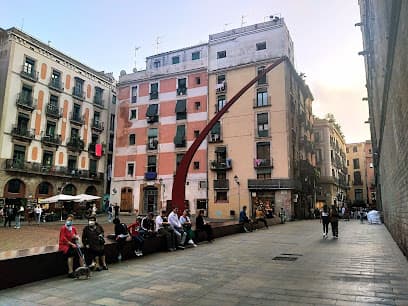
Fossar de les Moreres
50 m · Ciutat Vella
A red-brick scar in El Born where the defenders of 1714 lie in a mass grave. No traitors, just an eternal flame and a three-hundred-year-old grudge that still burns hot.
4.6(769)
Historical landmarkTourist attraction
ATTRACTION
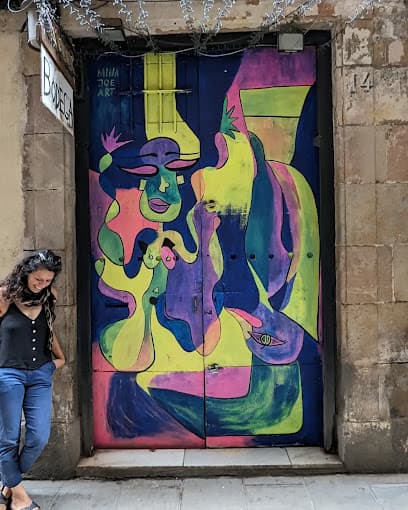
Free fall minajoe art
50 m · Ciutat Vella
A raw, unfiltered transmission of street art in the heart of El Born. Forget the gift shops; this is where local artist MinaJoe turns inner truth into a gravity-defying reality.
0.0(0)
Tourist attraction
RESTAURANT
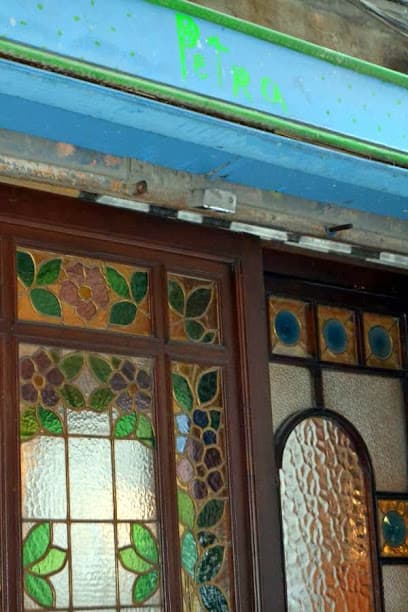
Restaurant Petra
€€50 m · Ciutat Vella
Tucked behind Santa Maria del Mar, Petra is a defiant slice of old-school Born, serving up duck confit and sobrassada that’ll make you forget the tourist traps outside.
4.6(1K)
Catalonian restaurantMediterranean restaurant
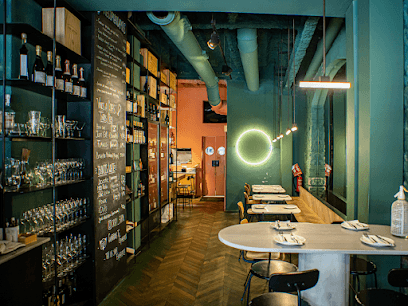
RESTAURANT
Orvay Restaurant
€€€50 m · Ciutat Vella
A sleek, wine-soaked sanctuary in the middle of El Born’s tourist chaos, serving modern Catalan tapas that actually respect the ingredients instead of just dressing them up for Instagram.
4.6(1K)
Tapas barCatalonian restaurant
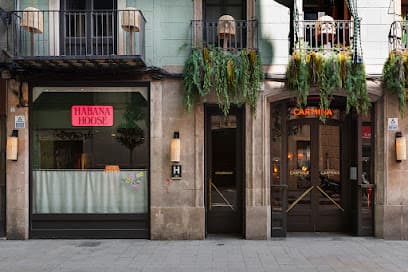
HOTEL
chic&basic Habana Hoose Hotel
€150 m · Ciutat Vella
A neon-soaked, 1950s Havana fever dream dropped into the medieval heart of El Born. It’s tight, it’s loud, and it’s got more soul than any sterile luxury chain.
4.3(192)
Hotel
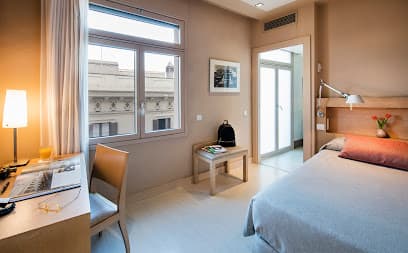
HOTEL
park hotel
200 m · Ciutat Vella
A mid-century modernist survivor standing guard over Estació de França, where 1950s rationalist architecture meets the chaotic, garlic-scented heart of El Born.
4.1(764)
Hotel
Frequently Asked Questions
Is Santa Maria del Mar worth visiting?
Yes, it is widely considered the finest example of pure Catalan Gothic architecture. Unlike the main Cathedral, its interior is spacious and austere, offering a more powerful and authentic historical atmosphere.
What should I see at Santa Maria del Mar?
Don't miss the bronze reliefs of the 'bastaixos' on the main doors, the 15th-century rose window, and the FC Barcelona crest hidden in the stained glass of the sanctuary.
Do I need tickets for Santa Maria del Mar?
Entry is free for prayer and mass during specific morning and evening hours. However, a 'cultural visit' ticket (€5-€10) is required during midday hours to access the nave, crypt, and rooftops.
How long do you need at Santa Maria del Mar?
Allow 30-45 minutes for the interior. If you book the rooftop tour, which is highly recommended for the architectural perspective, allocate at least 75 minutes.
Reviews
0 reviews for Basílica de Santa Maria del Mar
No reviews yet. Be the first to share your experience!