5.0
2 verified reviews
About
You’re standing at the intersection of Passeig de Gràcia and Gran Via de les Corts Catalanes, and the first thing that hits you isn’t the architecture. It’s the noise. A cacophony of TMB buses, swarming scooters, and the impatient honking of taxis that defines the Eixample district. And right there, in the center of this asphalt madness, sits a massive, circular middle finger to the surrounding chaos: the Font de Passeig de Gràcia. It’s a roundabout water fountain, sure, but in a city like this, nothing is ever just a fountain.
This isn’t one of those delicate, tucked-away plazas where you sip a vermouth in silence. This is high-stakes urban theater. The fountain was designed by Josep Maria Jujol in 1952. If that name doesn’t ring a bell, it should. Jujol was the guy in the shadows, the secret weapon who worked alongside Antoni Gaudí, bringing the color and the jagged, visceral energy to places like Park Güell and Casa Batlló. While Gaudí was the visionary, Jujol was the craftsman with dirt under his fingernails. This fountain was his late-career flex, a way to anchor the most expensive real estate in Spain with something heavy, permanent, and unapologetically grand.
When you look at the best things to do in Barcelona, standing on a street corner watching water spray might seem like a hard sell. But wait until the sun goes down. That’s when the magic—or the manipulation, depending on how cynical you are—happens. The lights kick in, turning the water into a shimmering curtain of gold and white against the backdrop of the illuminated Eixample attractions. It’s a moment of pure, unadulterated civic pride. You’ve got the Rolex and Chanel storefronts on one side and the grit of a working city on the other, and this fountain is the only thing holding the two worlds together.
The design itself is classic Jujol: stone basins, ornate carvings, and a sense of scale that demands you pay attention. It’s not trying to be modern or sleek. It’s heavy. It’s rooted. It feels like it’s been there since the Romans, even if it’s barely seventy years old. You can’t actually walk up to it—not unless you have a death wish and want to play chicken with a line of SEAT Ibizas—so you’re forced to appreciate it from the perimeter. It’s a distant beauty, a reminder that some of the best things in this city are meant to be observed from the sidewalk, preferably with a cheap coffee in hand and no particular place to be.
Is the roundabout fountain worth it? If you’re looking for a quiet place to reflect on your life choices, absolutely not. But if you want to feel the pulse of Barcelona—the real, thumping, exhaust-fumed heart of the city—this is where you find it. It’s a masterclass in how to build something beautiful in the middle of a mess. It’s a testament to the idea that even in the most commercialized, tourist-heavy part of town, you can still find a piece of soul if you’re willing to look past the shopping bags.
Don’t come here for a tour. Don’t come here because a guidebook told you to. Come here because you’re walking from a late lunch toward a late dinner, and you need a reminder that Barcelona is more than just a collection of ticketed monuments. It’s a living, breathing, occasionally loud and annoying organism that still knows how to put on a show for free. Stand on the corner, let the mist from the fountain hit your face when the wind shifts, and realize that this—the noise, the light, the water—is exactly what the city is supposed to feel like.
Type
Tourist attraction
Features
Tourist attraction
Categories
ArchitecturePublic ArtUrban Design
Opening Hours
- MondayOpen 24 hours
- TuesdayOpen 24 hours
- WednesdayOpen 24 hours
- ThursdayOpen 24 hours
- FridayOpen 24 hours
- SaturdayOpen 24 hours
- SundayOpen 24 hours
Accessibility
- Visible from all surrounding sidewalks
- Paved, flat pedestrian areas nearby
- Accessible via public transport with elevators
Location
Pg. de Gràcia
Eixample, Barcelona
Nearby
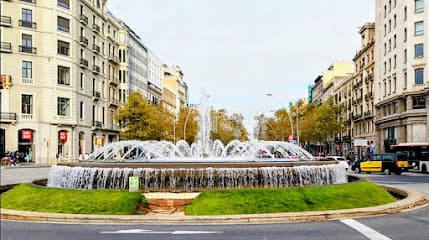
ATTRACTION
Font Monumental del Passeig de Gràcia
50 m · Eixample
A stone-and-water centerpiece by Jujol, standing defiant in a swirl of Eixample traffic, marking the grand intersection where the city’s grid meets the high-fashion chaos of Passeig de Gràcia.
4.3(140)
Tourist attraction
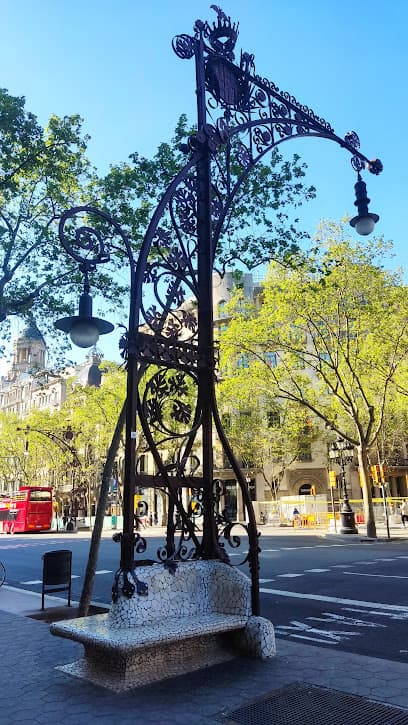
ATTRACTION
Bancs-fanals modernistes de Pere Falqués
100 m · Eixample
Thirty-two wrought-iron monsters rising from white ceramic benches, proving that in 1906 Barcelona, even a place to sit had to be a goddamn masterpiece of Modernisme.
5.0(9)
Tourist attraction
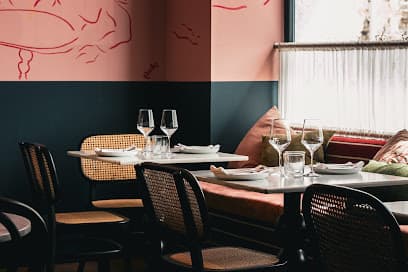
RESTAURANT
Batea
100 m · Eixample
A high-voltage seafood bistro in Eixample where Galician soul meets Barcelona cool, serving up briny oysters, killer cocktails, and a liquid-gold tortilla that demands your full attention.
4.7(907)
RestaurantSeafood restaurant
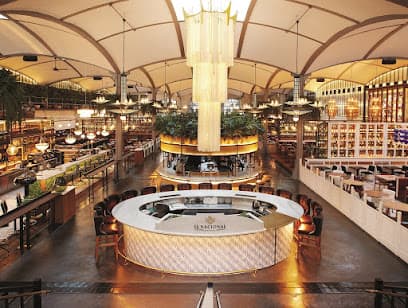
RESTAURANT
El Nacional Barcelona
€€€150 m · Eixample
A sprawling, high-octane celebration of Iberian food housed in a 19th-century garage. It’s loud, it’s beautiful, and it’s where Barcelona goes to indulge in its own excess.
4.4(35K)
Spanish restaurant
HOTEL
El Avenida Palace
€€€€100 m · Eixample
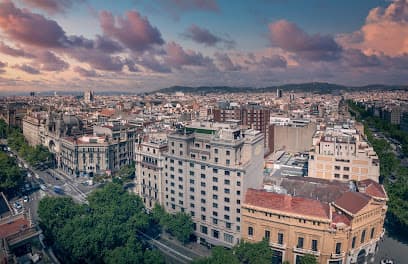
Step into 1952 at this old-world matriarch of the Gran Via, where The Beatles once hid from screaming fans and the marble lobby still whispers of old-school Catalan high society.
4.3(1K)
Hotel
HOTEL
Hotel Praktik Èssens
€€100 m · Eixample
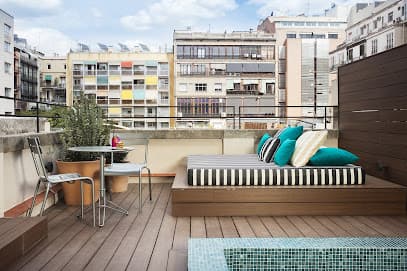
A perfume-themed retreat on Passeig de Gràcia where the air smells of orange blossoms and the terrace wine flows free. It’s high-end olfactory art without the usual Eixample pretension.
4.8(812)
HotelBeauty product supplier
Frequently Asked Questions
Is the Roundabout water fountain worth visiting?
Yes, especially at night when it is illuminated. It’s a classic piece of Barcelona architecture by Josep Maria Jujol that anchors the city's most famous shopping boulevard.
How do I get to the Passeig de Gràcia fountain?
Take the Metro (L2, L3, or L4) to the Passeig de Gràcia station. The fountain is located at the major intersection of Passeig de Gràcia and Gran Via de les Corts Catalanes.
Can you walk up to the fountain?
No, it is located in the center of a very busy traffic roundabout. You should view it from the sidewalks on the corners of the intersection for your own safety.
What is the best time to see the fountain?
Visit after sunset. The fountain is beautifully lit, providing a dramatic contrast to the surrounding city lights and luxury storefronts.
Reviews
0 reviews for Roundabout water fountain
No reviews yet. Be the first to share your experience!