5.0
1 verified reviews
About
Barcelona is a city that loves its grand gestures—the soaring spires of the Sagrada Família, the manicured greenery of Ciutadella, the high-gloss sheen of the Passeig de Gràcia. But if you want to find the city’s actual pulse, you have to go where the tourists don’t: the narrow, sun-bleached passages of Poblenou. Specifically, you need to find the Plaza de la Vaca, tucked away in the Passatge de Burrull.
This isn’t a 'plaza' in the way the guidebooks define it. There are no fountains, no overpriced tapas terraces, and certainly no guys in gladiator costumes. It’s a micro-space, a 'playable' clearing that feels like a secret shared between the neighborhood’s old-school residents and the new wave of tech workers from the nearby 22@ district. The name itself—the Square of the Cow—is a nod to the neighborhood’s industrial and agricultural past, and more specifically, to a piece of local lore that involves a sculpture or mural of a cow, often linked to the haunting verses of Joan Maragall’s poem 'La vaca cega' (The Blind Cow).
Walking into Passatge de Burrull is like stepping through a tear in the fabric of the city. One minute you’re on the bustling Rambla del Poblenou, and the next, you’re in a quiet, rustic alleyway where the air smells of salt and old brick. The passage itself is a survivor, a remnant of the 'Manchester of Catalonia' era when this neighborhood was the industrial engine of the Mediterranean. The buildings here are low-slung, weathered, and unapologetically honest.
The Plaza de la Vaca is the heart of this little enclave. Recently revamped as part of the city’s 'Ciutat Jugable' (Playable City) initiative, it’s a space designed for humans, not cars. You’ll see kids climbing on abstract structures, neighbors leaning against walls for a chat, and the occasional piece of street art that actually says something. It’s a place that respects the grit. It doesn’t try to be pretty; it tries to be useful.
What makes this spot worth the detour isn't a single landmark to check off a list. It’s the atmosphere. It’s the feeling of being in a place that belongs to the people who live there. In a city that often feels like it’s being sold off piece by piece to the highest bidder, the Plaza de la Vaca is a stubborn, beautiful reminder of what a neighborhood should be. It’s small, it’s weird, and it’s entirely authentic. If you’re looking for a corner of the city that hasn’t been polished into oblivion, this is it. Just don’t expect a gift shop.
The best way to experience it is to grab a coffee from one of the unpretentious bars on the Rambla del Poblenou, wander down the passage, and just sit. Watch the light change on the old brickwork. Listen to the sound of the city muffled by the narrow walls. It’s a five-minute experience that will stay with you longer than an hour in a museum queue. It’s the kind of place that reminds you why you travel in the first place: to find the things that aren't for sale.
Type
Park
Features
Park
Categories
Urban SpaceStreet ArtHistoryNeighborhood Spot
Accessibility
- Pedestrian-only passage
- Flat terrain
- Wheelchair accessible
Location
Passatge de Burrull
Sant Martí, Barcelona
Nearby
ATTRACTION
Parc del Patufet
50 m · Sant Martí
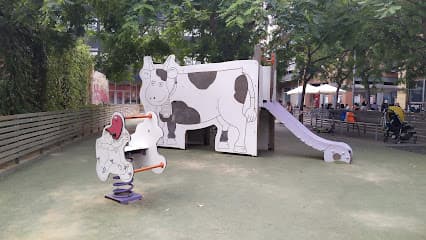
A gritty, unvarnished slice of Catalan folklore in Sant Martí where local kids play on the back of a giant ox and tourists are as rare as a quiet afternoon in August.
4.1(17)
Park
ATTRACTION
Plaça Vilarasau
150 m · Sant Martí
A quiet, concrete-and-green pause button in the middle of the @22 tech district’s glass-and-steel madness, where the shadows of the Agbar Tower actually let you breathe.
0.0(0)
Park
RESTAURANT
L' Artesana Poblenou
€€50 m · Sant Martí
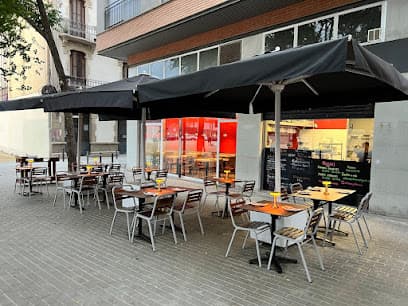
A gritty, glorious temple of the menú del día in Poblenou where the croquetas are life-changing and the spirit of old industrial Barcelona refuses to be gentrified out of existence.
4.6(1K)
RestaurantMediterranean restaurant
RESTAURANT
Restaurant Xinès
€€100 m · Sant Martí
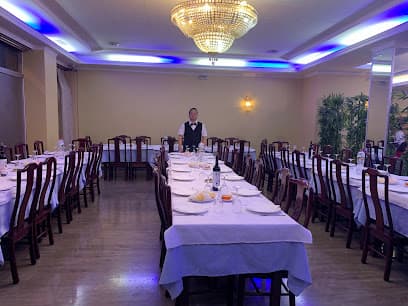
Forget the glass-and-steel tech hubs nearby; this is a sprawling temple of Peking duck and red lanterns where the portions are massive and the old-school vibe is unapologetic.
4.4(1K)
Chinese restaurant

HOTEL
Four Points by Sheraton Barcelona Diagonal
€€150 m · Sant Martí
A glass-and-steel refuge in the 22@ tech district, offering cold craft beer and a clear shot of the Sagrada Familia without the suffocating crowds of the center.
4.3(2K)
HotelMeeting planning service
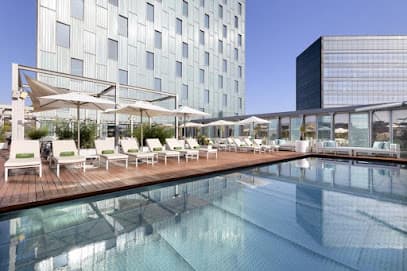
HOTEL
Meliá Barcelona Sky
€€250 m · Sant Martí
A glass-and-steel monolith rising from the industrial bones of Poblenou, offering vertigo-inducing views and a high-altitude escape from the tourist-choked streets of the center.
4.3(2K)
Hotel
Frequently Asked Questions
Is Plaza de la Vaca worth visiting?
Yes, if you appreciate quiet, local spots and industrial history. It’s not a major landmark, but it offers a rare, authentic glimpse into the soul of the Poblenou neighborhood away from the crowds.
What is the history of the name Plaza de la Vaca?
The name is local and informal, likely referring to a cow sculpture or mural in the area. It is often associated with the famous Catalan poem 'La vaca cega' by Joan Maragall, reflecting the neighborhood's literary and industrial heritage.
How do I get to Plaza de la Vaca?
It is located in Passatge de Burrull in the Sant Martí district. The easiest way to reach it is by taking the Metro L4 (Yellow Line) to Llacuna or Poblenou and walking toward Rambla del Poblenou.
Reviews
0 reviews for Plaza de la vaca
No reviews yet. Be the first to share your experience!