3.0
1 verified reviews
About
Plaça de Goya isn’t the Barcelona they sell you on the postcards. There are no soaring spires here, no whimsical mosaics, and certainly no hushed corridors of high art. It is a triangular wedge of concrete caught in the crosshairs of Carrer de Sepúlveda and Carrer de Muntaner, a place where the city’s relentless grid takes a jagged, awkward breath. If you’re looking for a 'hidden gem,' keep walking. This is a transition zone, a gritty handshake between the bourgeois order of the Eixample and the beautiful, chaotic mess of the Raval.
At the center of it all stands Francisco Goya himself—or at least a bronze version of him, sculpted by Josep Cañas in the 1980s. He looks slightly annoyed, perched on a pedestal, staring out at the river of scooters and TMB buses that surge past him every minute. It’s a fitting tribute to a man who saw the darkness and the madness of humanity. Here, he doesn't oversee a quiet garden; he oversees the daily grind. The statue is the anchor of the square, but the real show is the human traffic. This is one of the best urban squares in Barcelona for people-watching if you prefer your subjects unvarnished and in a hurry.
On one side, you have the Teatre Goya, a neighborhood institution that’s been a cornerstone of the city's stage scene since 1916. Before a show, the plaza fills with a specific kind of energy—older couples in their Sunday best, smelling of mothballs and expensive perfume, mingling with the skaters who use the plaza’s ledges as their personal playground. It’s a collision of worlds that happens every night, and nobody seems to mind. The skaters don’t care about the theater, and the theater-goers barely notice the clatter of urethane wheels against stone. That’s the real Barcelona—a city that lives on top of itself without asking for permission.
The air here smells of diesel, burnt espresso from the nearby cafes, and the faint, salty breeze that occasionally manages to snake its way up from the port. It’s not 'pleasant' in the traditional sense, but it is honest. You come here to feel the pulse of the Sant Antoni neighborhood, a place that is rapidly gentrifying but still manages to keep its fingernails a little dirty. Just a five-minute walk away is the Mercat de Sant Antoni, a steel-and-stone masterpiece of a market, but Plaça de Goya feels like the market’s scruffy, less-celebrated cousin.
Is Plaça de Goya worth visiting? If you’re on a three-day sprint to see the Gaudí highlights, absolutely not. You’ll find it boring, loud, and perhaps a bit ugly. But if you’ve had enough of the curated tourist experience, if you want to sit on a hard stone bench and watch a grandmother argue with a delivery driver while a teenager lands a kickflip in the shadow of a Spanish master, then yes. It’s a place to exist, not to sightsee. It’s a reminder that Barcelona is a living, breathing, working city that doesn't always have time to put on a costume for you.
Take a seat at one of the nondescript terraces bordering the square. Order a vermut, the kind that comes out of a tap and costs too little to be fancy. Don’t look for the 'best' anything. Just look at the way the light hits the buildings of the Eixample as the sun goes down, turning the grime into something approaching gold for a few fleeting minutes. In those moments, Plaça de Goya isn’t just a patch of pavement; it’s the center of the world, or at least the only part of it that matters.
Type
Park
Features
Park
Categories
Public SquareStatuesUrban Life
Accessibility
- Fully wheelchair accessible as it is a public outdoor plaza
Location
Plaça Goya
Eixample, Barcelona
Nearby
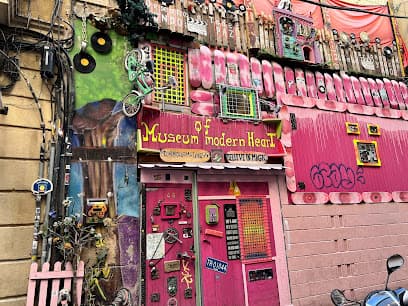
ATTRACTION
Art display
100 m · Ciutat Vella
A blood-red scream on a concrete wall, Keith Haring’s mural in the Raval is a visceral reminder of a grittier Barcelona, where art, activism, and skateboards collide.
4.3(4)
Tourist attraction
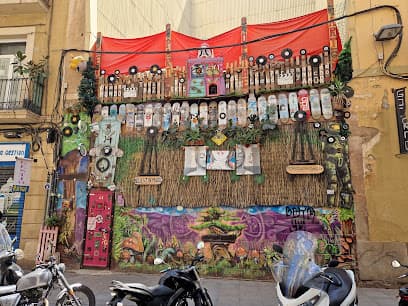
ATTRACTION
Skate Wall
100 m · Ciutat Vella
A concrete canvas where Barcelona’s skate soul bleeds into the Raval. It’s loud, scuffed, and covered in layers of spray paint—the city’s most honest, uncurated gallery.
4.5(13)
Tourist attraction
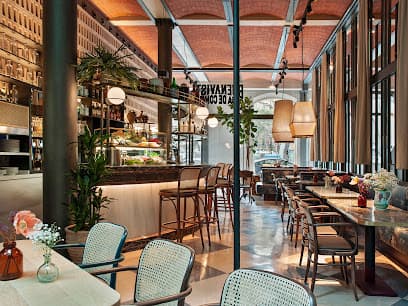
RESTAURANT
Casa de Menjars Buenavista
50 m · Ciutat Vella
A resurrected 1918 legend where the Sant Antoni spirit meets modern polish. Think killer bravas, honest Catalan soul, and a room that actually lets you breathe.
4.5(422)
RestaurantBar

RESTAURANT
Bar La Principal
€€50 m · Eixample
A high-ceilinged corner of Eixample where the vermut flows like water, the pastrami sandwich is a religious experience, and the ghost of old Barcelona refuses to be gentrified.
4.4(4K)
Tapas barLounge
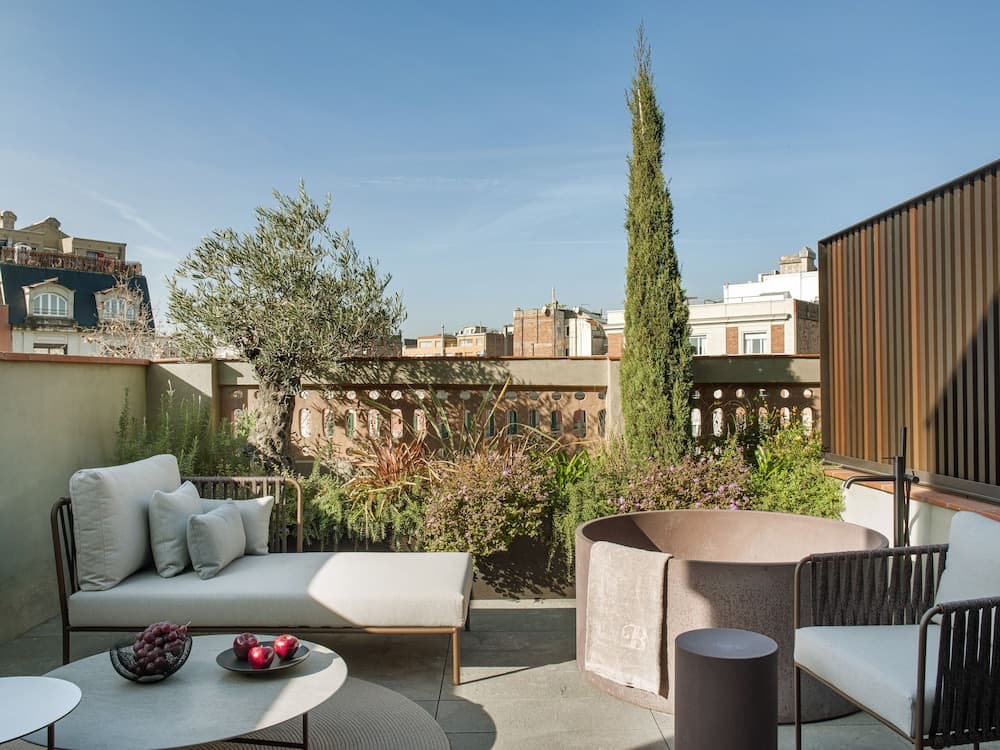
HOTEL
Antiga Casa Buenavista
€€50 m · Ciutat Vella
A century-old family legacy reborn as a slick boutique haunt where the Raval’s grit meets high-design comfort. It’s history you can sleep in, topped with a rooftop pool and a hell of a view.
4.7(329)
Hotel

HOTEL
Plaça Goya ROOMS
€50 m · Eixample
A raw, honest Eixample guesthouse where the balconies overlook the grinding gears of the city and the rooms offer a clean, stripped-back respite from the street heat.
4.0(187)
HotelInn
Frequently Asked Questions
Is Plaça de Goya worth visiting?
Only if you are interested in local urban life or attending a show at the nearby Teatre Goya. It is a functional city square rather than a traditional tourist attraction.
What is the main highlight of Plaça de Goya?
The primary feature is the bronze monument to the painter Francisco Goya, created by sculptor Josep Cañas and inaugurated in 1984.
How do I get to Plaça de Goya?
The square is easily accessible via the Barcelona Metro. The closest stations are Sant Antoni (L2) and Universitat (L1 and L2), both within a 5-minute walk.
Are there places to eat near Plaça de Goya?
Yes, the square is surrounded by local cafes and is just a short walk from the Sant Antoni Market area, which is famous for its brunch spots and traditional vermut bars.
Reviews
0 reviews for Plaça Goya
No reviews yet. Be the first to share your experience!