4.5
197,300 verified reviews
About
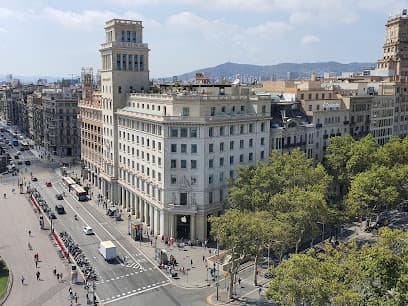
Welcome to the zero point. Plaça de Catalunya isn’t just a square; it’s the frantic, beating heart of a city that never quite figured out how to slow down. This is the DMZ between the dark, claustrophobic labyrinth of the Gothic Quarter and the grand, sun-drenched grid of Eixample. It is fifty thousand square meters of granite, fountains, and sheer, unadulterated chaos. If you’ve just arrived in Barcelona, chances are the Aerobús spat you out right here, blinking into the Mediterranean sun, clutching your luggage like a shield while a thousand pigeons decide whether or not you’re a viable source of crumbs.
Let’s talk about those pigeons. They are the unofficial landlords of the plaza. There is a specific, slightly disturbing ritual here where tourists buy bags of seed to lure these 'rats with wings' onto their arms for a photo. It’s a Hitchcockian fever dream played out in real-time. If that’s your thing, fine. But for the rest of us, the real show is the human theater. This is where the city’s veins converge—the Metro, the FGC, and the Rodalies trains all meet in a subterranean hive beneath your feet. Above ground, it’s a swirling vortex of backpackers, office workers, and street performers.
Architecturally, the square is a bit of a Frankenstein’s monster. It wasn’t even part of the original city plan; it was an afterthought that became a necessity. You’ve got the monumental, brutalist monument to Francesc Macià by Josep Maria Subirachs—the same guy who did the controversial Passion Façade at the Sagrada Família. It looks like an inverted staircase to nowhere, and most people walk right past it without a second glance. Then there are the statues by Josep Llimona and Pablo Gargallo, standing stoically amidst the noise, looking like they’ve seen enough history to want to close their eyes.
Dominating the skyline is the monolithic El Corte Inglés, a department store that looks like a fortress of consumerism. It’s not exactly 'authentic' Barcelona, but if you head to the top-floor cafeteria, you’ll get a view of the city that’ll make you forget the mediocre coffee. To the south, the square bleeds into La Rambla, a street that has been described as both the soul of the city and a tourist-clogged purgatory. To the north, the luxury boutiques of Passeig de Gràcia beckon with their polished glass and high-end price tags.
But there’s a grit here that you can’t ignore. The review highlights don’t lie: pickpockets are the apex predators of Plaça de Catalunya. They operate with a surgical precision that is almost respectable if it weren't so damn annoying. You have to maintain a certain level of 'city-smart' here. Keep your bag in front of you, don't get distracted by 'helpful' strangers, and for the love of God, don't leave your phone on the table while you check your map.
Is it beautiful? Not in the traditional sense. It’s loud, it’s crowded, and it smells like bus exhaust and bird droppings. But it is essential. You can’t understand Barcelona without standing in the middle of this plaza and letting the madness wash over you. It’s the starting line for every protest, the meeting point for every first date, and the first glimpse of the city for millions of travelers. It’s raw, it’s honest, and it’s the only place where you can feel the true scale of this magnificent, messy city. Don't linger too long—grab your bearings, watch your wallet, and then dive into the side streets where the real magic happens.
Type
Plaza, Tourist attraction
Duration
30-45 minutes
Best Time
Early morning to avoid the heaviest crowds, or at night when the fountains are illuminated.
What People Say
pigeons(2275)metro(846)airport(696)tour buses(339)pickpockets(173)department store(147)wallet(119)barca(112)
Features
Plaza
Tourist attraction
Categories
ArchitectureHistoryTransportation HubPublic Art
Ticket Prices
Free Admission
No tickets required
Must-See Highlights
Monument to Francesc Macià by Subirachs
The central fountains (Font de Canaletes is nearby, but the plaza has its own large basins)
The view from the 9th floor of El Corte Inglés
The 'Barcelona' sculpture by Frederic Marès
Visitor Tips
The Aerobús stop is on the side of the square near El Corte Inglés; buy tickets at the machine to save time.
Avoid the people offering birdseed unless you want to be covered in pigeons and pay a 'tip'.
The underground El Triangle mall has a clean, paid public restroom if you're desperate.
Use the square as a meeting point, but move to the side streets of El Raval or the Gothic Quarter for better food.
Good For
PhotographersHistory buffsPeople watchingBudget travelers
Why Visit
The ultimate 'Zero Point' connecting the medieval Gothic Quarter with the 19th-century Eixample.
The city's primary transportation nexus for the Aerobús, Metro, and regional trains.
A massive open-air gallery featuring sculptures by iconic Catalan artists like Subirachs and Llimona.
Nearby Landmarks
- 1-minute walk to La Rambla
- 2-minute walk to Passeig de Gràcia
- 2-minute walk to Portal de l'Àngel
- 10-minute walk to MACBA (Museum of Contemporary Art)
Accessibility
- Fully wheelchair accessible
- Tactile paving for the visually impaired
- Elevator access to all underground metro lines
Location
Plaça de Catalunya
Eixample, Barcelona
Nearby Hotels
Nearby Restaurants
In Eixample
ATTRACTION
Mural Margalef
Eixample
A towering splash of Mediterranean blue breaking the rigid geometry of Eixample, Joan Margalef’s mural is a visceral reminder that Barcelona’s soul isn't just in its museums.
0.0(0)
Tourist attraction
ATTRACTION
Mural Margalef
Eixample
A geometric middle finger to urban decay, this massive kinetic mural by Eduard Margalef turns a drab Eixample blind wall into a rhythmic, shifting explosion of optical art.
0.0(0)
Tourist attraction
ATTRACTION
Happy Foodies
Eixample
Forget the plastic-wrapped tourist traps; this is a deep dive into the grease, garlic, and soul of Catalan cooking where you actually learn to handle a knife and a porrón.
0.0(0)
Sightseeing tour agencyTour agency
Frequently Asked Questions
Is Plaça de Catalunya worth visiting?
Yes, but primarily as a central landmark and transport hub. It’s the best place to get your bearings, though it's often too crowded for a relaxing stroll.
How do I get to the airport from Plaça de Catalunya?
The Aerobús (A1 and A2) departs from the front of El Corte Inglés every 5-10 minutes, providing a direct link to both airport terminals.
Is Plaça de Catalunya safe?
It is generally safe but is a notorious hotspot for pickpockets. Keep your belongings secure and stay alert, especially when watching street performers or using the metro.
What are the best things to see in the square?
Look for the Francesc Macià monument by Subirachs, the twin fountains that light up at night, and the various sculptures by Catalan artists like Josep Llimona.
Reviews
0 reviews for Plaça de Catalunya
No reviews yet. Be the first to share your experience!