4.8
133 verified reviews
About
You spend your days in Barcelona dodging selfie sticks, weaving through the human tide of the Gothic Quarter, and trying not to get fleeced for a mediocre paella. Eventually, you need an antidote. You need to go uphill, deep into the residential soul of the city, past the laundry hanging over balconies in Horta-Guinardó, to a place that doesn't give a damn about your Instagram feed. The Municipal Planetarium isn't a high-tech, glass-and-steel monument to corporate sponsorship. It’s something better: it’s honest.
Located within the grounds of a municipal gardening school, this place is a throwback to a time when science was about wonder rather than spectacle. You won't find 4D immersive seats that shake your kidneys or overpriced gift shops selling plastic space shuttles made in a factory halfway across the world. What you find is a small, dedicated dome and a projector that does one thing very well: it shows you the stars. It’s one of those things to do in Barcelona with kids that doesn't feel like a cynical trap. It’s an educational sanctuary where the explanations are clear, the passion is palpable, and the scale of the universe is allowed to speak for itself.
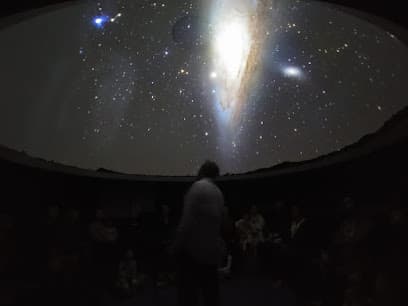
The arrival is half the trip. You’re in the Municipality of Horta-Guinardó, a neighborhood that feels like a different planet compared to the Eixample. It’s steep, it’s green, and it’s lived-in. When you finally step inside the planetarium, the air changes. It’s the smell of a library—quiet, slightly dusty, and full of potential. When the lights go down, the ceiling dissolves into the deep reach of space. It’s a protein rush to the cortex for anyone who’s ever looked up at a polluted city sky and wondered what they were missing. The celestial projections are handled with a level of intimacy you just don't get at the massive science centers. You aren't just a ticket number here; you’re a witness to the cosmos.
If you're wondering if a visit is worth your time, consider this: if you’re looking for a flashy, Hollywood-style production, probably not. Go to a cinema for that. But if you want to understand the night sky, if you want your kids to actually learn something about the rotation of the earth or the distance of the stars without being overstimulated by flashing lights, this is the spot. It’s one of the best science museum experiences in Barcelona precisely because it’s so focused. It’s a reminder that the most profound things are often the simplest.
Don't expect a red carpet. The staff are educators, not tour guides. They care about the facts. The sessions are often geared toward schools, but the public openings are a local secret worth uncovering. It’s a quiet, contemplative corner of a city that is often anything but quiet. You leave with your head slightly tilted back, looking at the sky over the Mediterranean, realizing that while the city below is screaming for your attention, the real show has been happening overhead for billions of years. It’s a humbling, necessary experience that doesn't cost a cent and stays with you much longer.
Type
Science museum, Tourist attraction
Duration
1-1.5 hours
Best Time
Weekend mornings for public sessions, as weekdays are dominated by school groups.
Guided Tours
Available
What People Say
kids(10)explanation(5)activity(4)astronomical(3)adults(3)passion(2)didactics(2)
Features
Science museum
Tourist attraction
Categories
AstronomyEducationFamily FriendlyScience
Ticket Prices
Free Admission
No tickets required
Opening Hours
- Monday9 AM to 12:30 PM
- Tuesday9:30 AM to 12:30 PM
- Wednesday9:30 AM to 12:30 PM
- Thursday9:30 AM to 12:30 PM
- Friday9 AM to 12:30 PM
- SaturdayClosed
- SundayClosed
Must-See Highlights
The central star projector
The seasonal night sky demonstration
The surrounding gardens of the Escola Municipal de Jardineria
Visitor Tips
Book your spot in advance via the website as public capacity is very limited.
Combine your visit with a walk up to the Bunkers del Carmel for the best sunset view in the city.
The walk from the metro is steep; if you have mobility issues, consider a taxi from the station.
Good For
Families with childrenScience enthusiastsBudget travelersLocal experience seekers
Why Visit
Intimate, small-scale dome experience that avoids the chaos of larger tourist museums
Located in the authentic, hilly neighborhood of Horta-Guinardó with great local vibes
Highly educational focus with expert explanations rather than just visual spectacle
Nearby Landmarks
- 12-minute walk from Hospital de Sant Pau (UNESCO site)
- 8-minute walk from Parc del Guinardó
- 20-minute walk from Bunkers del Carmel
Accessibility
- Wheelchair accessible entrance
- Accessible seating in the dome
Location
C Brussel.les, 34*40
Municipality of Horta-Guinardó, Barcelona
Nearby Hotels
Nearby Restaurants
In Municipality of Horta-Guinardó
ATTRACTION
メリーゴーランド
Municipality of Horta-Guinardó
A spinning, neon-lit relic of neighborhood childhood, tucked away in the dusty, unvarnished heart of Horta-Guinardó, far from the Gaudi-crazed tourist herds.
0.0(0)
Park
ATTRACTION
SunsetBoatBarcelona
Municipality of Horta-Guinardó
Escape the sweltering, tourist-choked streets for the open Mediterranean, where the city skyline bleeds into the dusk and the Cava actually tastes like freedom.
0.0(0)
Tourist attraction

ATTRACTION
Labyrinth
Municipality of Horta-Guinardó
Barcelona’s oldest garden is a neoclassical middle finger to the city’s chaos, featuring a cypress maze where you can actually lose yourself—and the crowds—for a few euros.
0.0(0)
Tourist attraction
Frequently Asked Questions
Is the Municipal Planetarium worth visiting?
Yes, especially for families and those seeking an authentic, low-key educational experience away from the main tourist crowds. It offers intimate and clear astronomical explanations that larger museums often lack.
What should I know before visiting the Municipal Planetarium?
Check the schedule on the official Barcelona Ajuntament website beforehand, as many sessions are reserved for school groups. Public sessions are limited and usually require prior booking.
How do I get to the Municipal Planetarium?
Take the Metro L4 (Yellow Line) to Guinardó | Hospital de Sant Pau. From there, it's a bit of an uphill walk through a residential area, so wear comfortable shoes.
Is it good for kids?
It is excellent for children. The explanations are designed to be accessible and engaging, making it one of the most respected educational science spots in the city.
Reviews
0 reviews for Municipal Planetarium
No reviews yet. Be the first to share your experience!