5.0
1 verified reviews
About
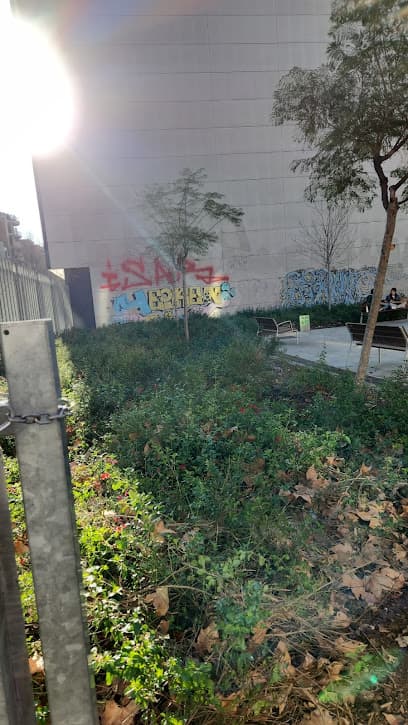
Barcelona is a city that constantly tries to sell itself to you. It’s a relentless parade of Gaudí-fied curves, overpriced tapas, and the rhythmic thrum of a million rolling suitcases. But if you want to see where the city actually exhales, you have to look for the cracks in the grid. You have to find the 'Interior d'illa.' At Carrer de Pallars, 293, in the heart of the Sant Martí district, there is one such crack. It’s not a park in the way the tourism board wants you to think of parks. There are no sweeping vistas or manicured rose gardens. It is a utilitarian, honest, and deeply necessary urban lung.
To understand this place, you have to understand Poblenou. This was once the 'Manchester of Catalonia,' a sprawling landscape of textile mills, smoke, and industrial sweat. Today, it’s been rebranded as the 22@ district—a shiny, glass-and-steel playground for tech startups and design firms. But the bones of the old neighborhood are still there, and the Interior d'illa at Pallars 293 is where those bones rest. You enter through a nondescript passage, leaving behind the grey, traffic-heavy artery of Pallars. Suddenly, the volume drops. The sound of the city doesn't disappear; it just changes. The roar of the motorcycles is replaced by the distant clatter of a kitchen, the rhythmic bounce of a basketball, or the sharp, echoing laughter of a local kid.
This is a best park Barcelona discovery for those who hate 'best park' lists. The architecture here is a collision of eras. On one side, you have the weathered, laundry-draped balconies of the people who have lived here since before the Olympics changed everything. On the other, the sharp, cold lines of modern residential blocks. It’s a visual representation of the city’s struggle to maintain its soul while chasing the future. The ground is often concrete or hard-packed earth, punctuated by a few hardy Mediterranean trees and benches that have seen better days. It’s not 'pretty' in a postcard sense, but it is beautiful in its authenticity. It’s a place where you can sit and watch the real life of Sant Martí unfold without a filter.
Is Interior d'illa worth visiting? If you’re looking for a 'must-see' landmark, absolutely not. You’ll be bored in five minutes. But if you’re a traveler who feels the weight of the crowds at the Sagrada Familia, this is your decompression chamber. It’s one of the few places in the city where you aren't being marketed to. There are no kiosks selling cheap sangria, no street performers, no one trying to put a friendship bracelet on your wrist. It’s just space. In a city as dense as Barcelona, space is the ultimate luxury.
When you’re here, you’re an observer in a private-public living room. You’ll see the tech workers from the nearby offices eating a solitary sandwich, the elderly women discussing the price of fish, and the ghosts of the industrial past lingering in the shadows of the surrounding walls. It’s a reminder that the Cerdà plan—the grid that defines Barcelona—was always meant to have these green, open hearts. Most were filled in by greedy developers over the last century, but in Sant Martí, they are reclaiming them. This isn't a tourist attraction; it’s an act of urban defiance. It’s a place to bring a coffee, a book, or just a heavy thought, and let the city happen around you without demanding your participation. It’s raw, it’s quiet, and it’s the most honest thing you’ll find in Poblenou.
Type
Park
Features
Park
Categories
Urban DesignPoblenouPublic SpaceArchitecture
Opening Hours
- Monday10 AM to 8 PM
- Tuesday10 AM to 8 PM
- Wednesday10 AM to 8 PM
- Thursday10 AM to 8 PM
- Friday10 AM to 8 PM
- Saturday10 AM to 8 PM
- Sunday10 AM to 8 PM
Accessibility
- Wheelchair accessible
- Flat terrain
- Public benches
Location
Carrer de Pallars, 293
Sant Martí, Barcelona
Nearby
ATTRACTION
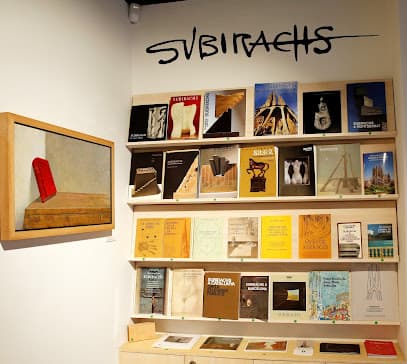
Espai Subirachs
250 m · Sant Martí
A jagged, honest sanctuary in Poblenou dedicated to the man who dared to finish Gaudí’s masterpiece with brutal, angular defiance. Though the physical space closed its doors in 2022, the legacy of Subirachs remains a vital, sharp-edged piece of the c
4.7(163)
MuseumTourist attraction
ATTRACTION
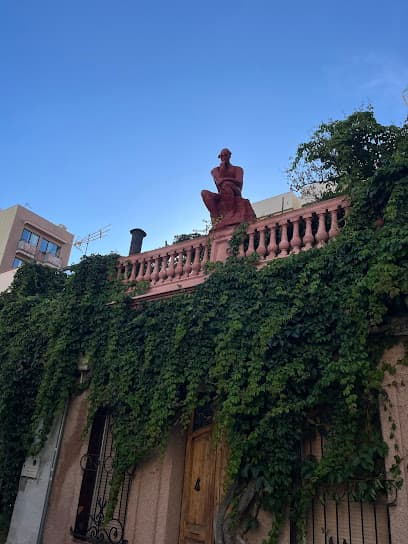
El Pensador
250 m · Sant Martí
A small, anonymous figure lost in thought amidst the quiet, sun-drenched brickwork of Poblenou’s industrial past. It’s the kind of silence you won’t find anywhere near the Rambla.
5.0(5)
Tourist attraction
RESTAURANT
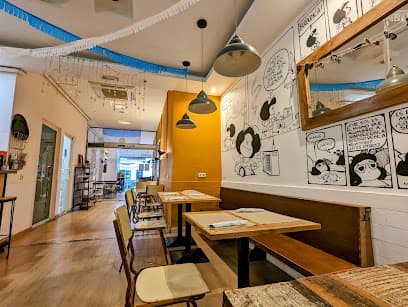
Nou Xupito Poblenou
€€100 m · Sant Martí
Forget the foam and the tweezers; this is a temple of smoke and salt where the entraña is king and the empanadas are a religious experience in the heart of Poblenou.
4.6(665)
Bar & grillArgentinian restaurant
RESTAURANT
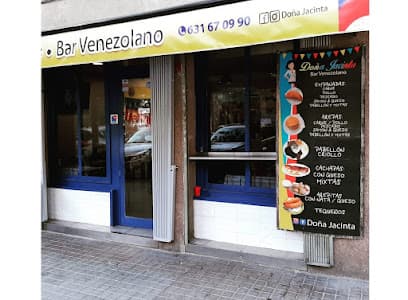
Doña Jacinta
€€150 m · Sant Martí
A loud, grease-slicked temple to Venezuelan soul in Sant Martí. Come for the massive, crunch-perfect empanadas and stay for the pabellón that tastes like a grandmother’s hug.
4.5(2K)
Venezuelan restaurantCreole restaurant
HOTEL
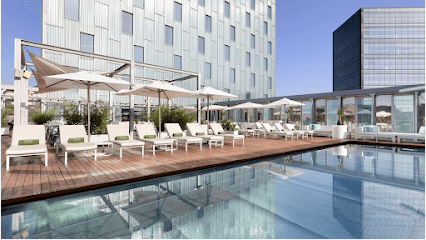
The Level at Meliá Barcelona Sky
€€200 m · Sant Martí
A glass-and-steel monolith in Poblenou where you trade the tourist crowds for 28th-floor views, private lounges, and the feeling of being a high-altitude regular above the city.
4.5(348)
Hotel
HOTEL
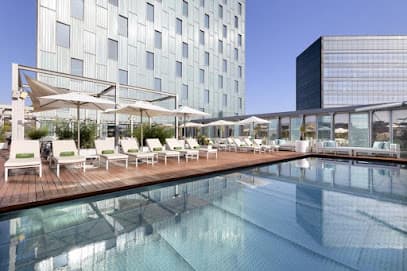
Meliá Barcelona Sky
€€200 m · Sant Martí
A glass-and-steel monolith rising from the industrial bones of Poblenou, offering vertigo-inducing views and a high-altitude escape from the tourist-choked streets of the center.
4.3(2K)
Hotel
Frequently Asked Questions
Is Interior d'illa worth visiting?
Only if you want to escape the tourist crowds and see a quiet, authentic neighborhood space. It is a simple courtyard for locals, not a major landmark with sights or activities.
What is an Interior d'illa in Barcelona?
It is a public garden or plaza located inside a residential block. Originally part of Ildefons Cerdà's 19th-century urban plan, these spaces provide light and air to the dense city grid.
How do I get to the Pallars 293 Interior d'illa?
The easiest way is via the L4 Metro (Yellow Line) to the Poblenou station. From there, it is a short 5-minute walk down Carrer de Pallars toward the 22@ tech district.
Is there an entrance fee for the park?
No, admission is completely free. These are public municipal spaces managed by the Barcelona City Council and are open to everyone during daylight hours.
Reviews
0 reviews for Island Interior (Interior D'illa)
No reviews yet. Be the first to share your experience!