About
Forget the Gothic Quarter. Forget the sun-drenched terraces of Barceloneta where they charge you ten euros for a frozen croquette. If you want to see the heart of the city—the one that doesn’t give a damn about your Instagram feed—you get on the L4 metro and you ride it until the tourists start to look nervous. You get off at Llucmajor and you walk toward Carrer del Doctor Pi i Molist. This is 'Pimoli' to the locals, a concrete artery pumping life through the working-class district of Nou Barris.
This isn’t the Barcelona of the guidebooks. There are no trencadís mosaics here, no soaring spires, no 'hidden gems' that have already been ruined by a thousand travel bloggers. This is a place of high-density housing, steep hills, and the kind of raw, unvarnished honesty that only exists in neighborhoods built by the hands of the people who live in them. In the 1950s and 60s, this area was a frontier, settled by migrants from Andalusia and Extremadura who literally built their own homes and fought the city for every paved road and street light. You can feel that history in the pavement. It’s a neighborhood that had to demand its right to exist.
Walking down Pi i Molist toward number 77, you’re enveloped in the sensory reality of the 'Other Barcelona.' It’s the sound of metal shutters rattling up at dawn, the hiss of espresso machines in bars where the floor is still covered in sawdust and sugar packets, and the omnipresent, mouth-watering scent of 'pollos a l'ast'—rotisserie chickens dripping fat onto potatoes in the window of a local rostisseria. At number 77, you find yourself at the threshold of the Parc de la Guineueta. This isn’t a manicured garden; it’s a communal living room. You’ll see grandmothers on benches discussing the price of hake, teenagers practicing skate tricks, and old men playing dominoes with a level of intensity usually reserved for blood feuds.
The centerpiece of this specific stretch is the park itself, famous for its iron statue of a fox—the 'guineu' that gives the neighborhood its name. It’s a symbol of the area’s scrappy, survivor spirit. If you’re looking for a 'thing to do,' the thing is simply to exist here for an hour. Sit in the park, order a 'caña' at one of the unpretentious bars lining the street, and watch the real city go by. There is a profound beauty in the lack of artifice. Nobody is performing 'Catalan culture' for you here; they’re just living it.
Is Nou Barris worth visiting? If you’re the kind of traveler who needs a gift shop and a multilingual menu to feel comfortable, then stay in the Eixample. But if you want to understand the soul of Barcelona—the grit, the struggle, and the fierce neighborhood pride that keeps this city from becoming a total theme park—then a walk down Pi i Molist is mandatory. It’s a protein rush of reality, a reminder that the best parts of a city are often the ones that don't try to impress you. It’s honest, it’s loud, and it’s entirely real. Just don't expect anyone to speak English to you, and for the love of god, don't ask for a sangria.
Type
Tourist attraction
Duration
1-2 hours
Best Time
Late afternoon when the neighborhood comes alive and the park is full of locals.
Features
Tourist attraction
Categories
NeighborhoodLocal CulturePark
Ticket Prices
Free Admission
No tickets required
Must-See Highlights
The Iron Fox statue in Parc de la Guineueta
Local 'menú del día' spots along the street
The unscripted neighborhood energy in the central plaza
Visitor Tips
Brush up on basic Spanish or Catalan as English is rarely spoken here.
Visit the nearby Mercat de la Guineueta for incredible local produce and cheap eats.
Don't be afraid to wander the side streets to see the unique post-war architecture.
Good For
Solo travelersBudget travelersUrban explorersPhotography enthusiasts
Why Visit
Zero tourist traps or souvenir shops
Authentic working-class Barcelona atmosphere
Proximity to the historic Parc de la Guineueta
Nearby Landmarks
- Parc de la Guineueta (1-minute walk)
- Mercat de la Guineueta (5-minute walk)
- Turó de la Peira Park (10-minute walk)
Accessibility
- Street level access
- Public park is wheelchair accessible
- Nearby metro stations have elevators
Location
Carrer del Doctor Pi i Molist, 77
Nou Barris, Barcelona
Nearby Hotels
Nearby Restaurants
In Nou Barris
ATTRACTION
Plaça Verda de la Prosperitat
Nou Barris
A concrete-and-chlorophyll middle finger to urban neglect, where Nou Barris locals reclaim their right to breathe, drink, and exist far from the suffocating Sagrada Familia crowds.
0.0(0)
Garden
ATTRACTION
Ascensor Canfranc - Paseo de Fabra y Puig 08031 Nou Barris
Nou Barris
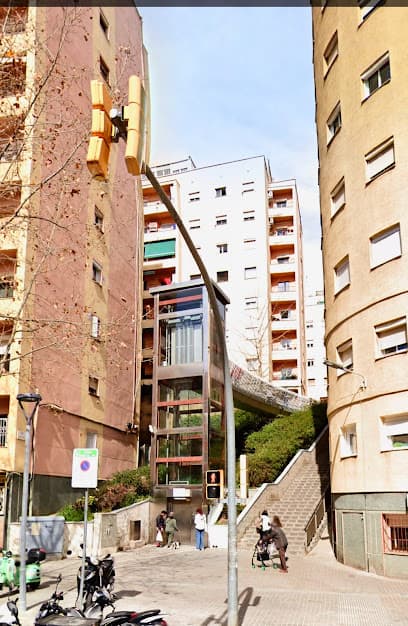
A glass-and-steel lifeline in Nou Barris that saves your knees and offers a gritty, honest view of the Barcelona tourists usually ignore. No gift shops, just gravity-defying utility.
0.0(0)
Hiking area
ATTRACTION
Cabaña e industria
Nou Barris
Forget the Gothic Quarter. This is the raw edge of Barcelona where industrial grit meets the pine-scented foothills of Collserola. Real, unpolished, and utterly devoid of tourists.
0.0(0)
Hiking area
Frequently Asked Questions
Is Carrer del Doctor Pi i Molist worth visiting?
Yes, if you want to see the authentic, non-touristy side of Barcelona. It offers a raw look at local life in Nou Barris, far from the crowds of the city center.
How do I get to Nou Barris from the center?
Take the L4 (Yellow Line) metro to Llucmajor or the L5 (Blue Line) to Virrei Amat. From there, it is a short walk to the Pi i Molist area.
What is there to see near Pi i Molist 77?
The main attraction is the Parc de la Guineueta, a large neighborhood park featuring a famous iron fox statue and a glimpse into the daily lives of local residents.
Reviews
0 reviews for Carrer pimoli42
No reviews yet. Be the first to share your experience!